Showing posts with label Hamlet. Show all posts

Wednesday, 15 December 2010

The Critical Creative Response: Adapting a scene from "Hamlet"

Coursework task for Creative Critical Response

Here is the title you will be working with again:

Choose a scene from "Hamlet" that you could adapt for television or film. Rewrite the script including stage-directions then write a commentary on how and why you adapted the scene in the way you did. You should include reference to critical views/sources about the play and how they shaped your decisions.

It is helpful here to think of yourself as writing a set of Director's notes for a new production of your scene.

Approximate word count: 600

We will continue work on this this week. Aim to ensure that you have:
  • Edited your scene down in length
  • Made notes on what cuts you and why
  • Made notes on the importance of what is left in
  • Added stage directions appropriate to your production
  • Indicated details about the modernisation (e.g. setting)
You will need to produce a typed version of your edited scene.

Comparing contexts

What differences can you identify between:
  • The 16th/17th century (renaissance) context and the modern context for your scene and the play
  • How audiences might have received the play and you will scene in the 16th/17th century compared with now
Make notes on similarities and differences between these two contexts. These will support your writing of the commentary on your adaptation of a scene from "Hamlet".

Assessment objectives

Here are the two key assessment objectives again:

AO1: Articulate creative, informed and relevant responses to literary texts, using appropriate terminology and concepts, and coherent, accurate written expression.

AO4: Demonstrate understanding of the significance and influence of the contexts in which literary texts are written and achieved

Homework: Masterpiece Theatre
  1. Read and make notes on this essay on "Adapting Shakespeare"on the Masterpiece Theatre website that describes how one director views the adaptation of Shakespeare from stage to screen.
  2. Carry out research on Christopher Marlowe and "Dr Faustus". Hint: use the sidebars.
  3. Find out about the Faust legend.
Have a blessed Christmas!

Monday, 11 October 2010

"Hamlet" Act 2: Lovers and spies

Quiz

Find out who says the following lines in Act 1, to whom and what they are about:
  1. "What art thou that usurp'st this time of night...?" (1.1)
  2. "This above all - to thine own self be true" (1.3)
  3. "O villain, villain, smiling, damned villain" (1.5)
  4. "O cursed spite/That ever I was born to set it right" (1.5)
  5. "My lord, he hath importuned me with love" (1.3)
  6. "O Hamlet, what a falling off was there!" (1.5)
  7. "Good Hamlet, cast thy nightly colour off" (1.2)
  8. "Now sir, young Fortinbras,/Of unimproved mettle hot and full" (1.1)
  9. "And in the morn and liquid dew of youth/Contagious blastments are most imminemt" (1.3)
  10. "Angels and ministers of grace defend us!" (1.4)

Be prepared to explain your ideas to the class.

"Hamlet" Act 2

Act 2 is divided into five sections:
  1. Polonius the diligent father?
  2. Who are Rosencranz and Guildenstern?
  3. Hamlet’s Love Letter
  4. My excellent good friends!
  5. Hamlet and the Players
This week we will concentrate on the first half of Act Two, in particular on the relationship between Hamlet and Ophelia and on the role of his two friends Rosencrantz and Guildenstern.

Reading the script and responding to the Brannagh production

We will read together Act Two Scene One lines 73 to the end of the scene and the first 220 lines of Scene Two to the point at which Polonius leaves the stage. After reading and watching Brannagh's production make notes on these questions:
  1. How is Hamlet portrayed in this part of the script?
  2. What about Ophelia?
  3. How is their relationship explored indirectly?
  4. What do we learn about Rosencrantz and Guildenstern?
  5. How are the king and queen portrayed here at the start of Act Two?
Homework
  1. Summarise the first Act of Hamlet scene by scene.
  2. summarise what you have learned about the relationships between Hamlet and Ophelia, Polonius and Ophelia, and Hamlet and the King and Queen (his uncle and mother).
Image: Hamlet and Ophelia from Brannagh's production.

Monday, 4 October 2010

Angels and ministers of grace defend us: language and context in Act One of "Hamlet"

This week we will examine further the meaning of 'context' when applied to the study of literature. We will also examine further the language of the ghost's story in act one and two speeches of Hamlet.

Context: Elizabethan and Jacobean England

In pairs talked briefly about the findings of your research into the context of Hamlet that he conducted last week and for homework. Be prepared to present your findings to the class as a whole.

Language in the Ghost's story

Look back at the story which the ghost of old Hamlet tells his son in act one scene five. Pick out examples of language that refers to:
  • The physical corruption and death
  • purity and impurity, especially sexual impurity
  • the body
  • religious language
What impression does the ghost's speech gives the audience of:
  • Old King Hamlet
  • Claudius
  • Gertrude to the Queen?
Angels and ministers of grace defend us

We will reread Hamlet's speech before he meets the Ghost and immediately after. These will be found in act one scene four lines 39 to 57 and act one scene lines 92 to 109.

In pairs or small groups discuss what impressions of Hamlet both these speeches give?
Is there a noticeable change between the time beforehand that he meets the ghost and after?

Make notes and be prepared to feedback to the class.

Homework

Summarise Hamlet's reaction to the Ghost at the end of Act One. Refer both to the Ghost's speech and to Hamlet' s two speeches before and after meeting the Ghost.

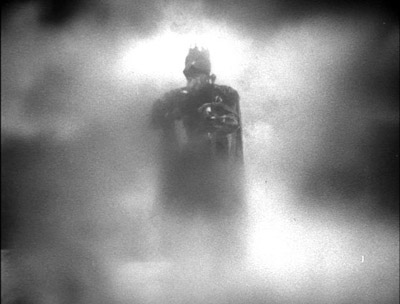
Image: Hamlet's dead father.

Thursday, 16 October 2008

The play's the thing: Hamlet, Ophelia and the conscience of the King

In this lesson we will watch Kenneth Branagh's version of Act 3 of "Hamlet". Before doing so, however, you will present your ideas about Act 2 and language from the first two acts of the play.

Task 1: Presentations about sequences on Act 2

In your groups, present your ideas about this part of the play.

Task 2: "O what a rogue and peasant slave am I!"

Hamlet ends Act 2 with a soliloquy comparing himself to the Player who has just spoken about King Priam. In pairs, after we have watched and read this soliloquy, discuss how the soliloquy communicates:
  • Hamlet's self-examination
  • Hamlet's emotions about his own situation
  • Hamlet's decision making

Be prepared to support your ideas from the script (annotate your own copy).

Task 3: Watching Branagh's "Hamlet"


Homework 1: Essay

Discuss how Shakespeare uses at least two soliloquies to communicate to the audience about Prince Hamlet. You may focus on Acts 1-3 alone but make sure you refer closely to the script.

Present your work as word processed and double-spaced with 800 words.

Homework 2: Hamlet and Ophelia

Re-read Act 3 scene 1 lines 58-164, the soliloquy "To be or not to be" and dialogue between Hamlet and Ophelia. Make notes on what we learn in this sequence about Hamlet and Ophelia and their relationship.

Bring to next week's lesson on A4 paper for discussion.

Thursday, 2 October 2008

Hamlet's encounter with the Ghost

Homework: 3rd October 2008 (Happy birthday Dr Milne!)

"I am thy father's spirit,
Doomed for a certain term to walk the night" (Hamlet 1.5).

Task 1:

Re-read Act 1 scene 4 in which Hamlet first sees the Ghost of his dead father. Look especially at lines 20-39 starting "Angels and ministers of grace defend us!"
  1. What evidence is there in Hamlet's speech of his uncertainty about the Ghost?
  2. How should we explain this?
Task 2:

Re-read the Ghost's story in Act 1 scene 5 from lines 9-91.
  1. What is the Ghost's explanation for his death?
  2. What imagery in the Ghost's speech suggests the corruption at the heart of the Danish court?
  3. What examples of religious imagery can you find in the Ghost's speech?

Task 3:

Read at least to the end of Act 2 of "Hamlet" (more if you can). Check out the links I have provided about studying Shakespeare to help you (scroll down left hand side of the page to see these Shakespeare hotspots).

Get a google account then send me your email address (to thepapist@live.co.uk) and I'll make you a member. Post any questions you have or requests for help!

Hand in next week, 10th October on A4 paper, answers word-processed please!